
Plants & Animals
How to Spot a Wild Bison
Where, when and how to find Europe’s largest land animal in Białowieża Forest.
Seeing a wild European bison is the highlight of many people’s trip to Białowieża Primeval Forest: Poland’s national animal is the icon of the forest, and has a truly epic history. But despite their large size, finding one can sometimes pose a challenge. They can be rather shy, spending the majority of their time in the forest depths. The most common question from visitors is: where can I see one?
Generally speaking, bison inhabit the whole Białowieża Forest area. But to narrow down your search, two facts are worth bearing in mind. First: bison are a refugee species. In prehistoric times they inhabited open habitats — plains and meadows. Nowadays, as these habitats are scarce, bison spend most of their time inside the forest. But open ground is in their genes, so they frequently emerge from the forest at night to forage, returning to the forest by day. Dusk and dawn on the various meadows in and around the forest are thus your best bet.
The second key factor is seasonality. In winter there is little food available inside the forest. Bison herds gather around supplementary feeding points and spend more time out on the meadows. The feeding sites are off-limits to tourists — with one exception: the station at Kosy Most in the north of the national park has a public viewing area. In winter, both the meadows and feeding stations give a near-reliable chance of seeing bison.
The Best Spot: Teremiski Village
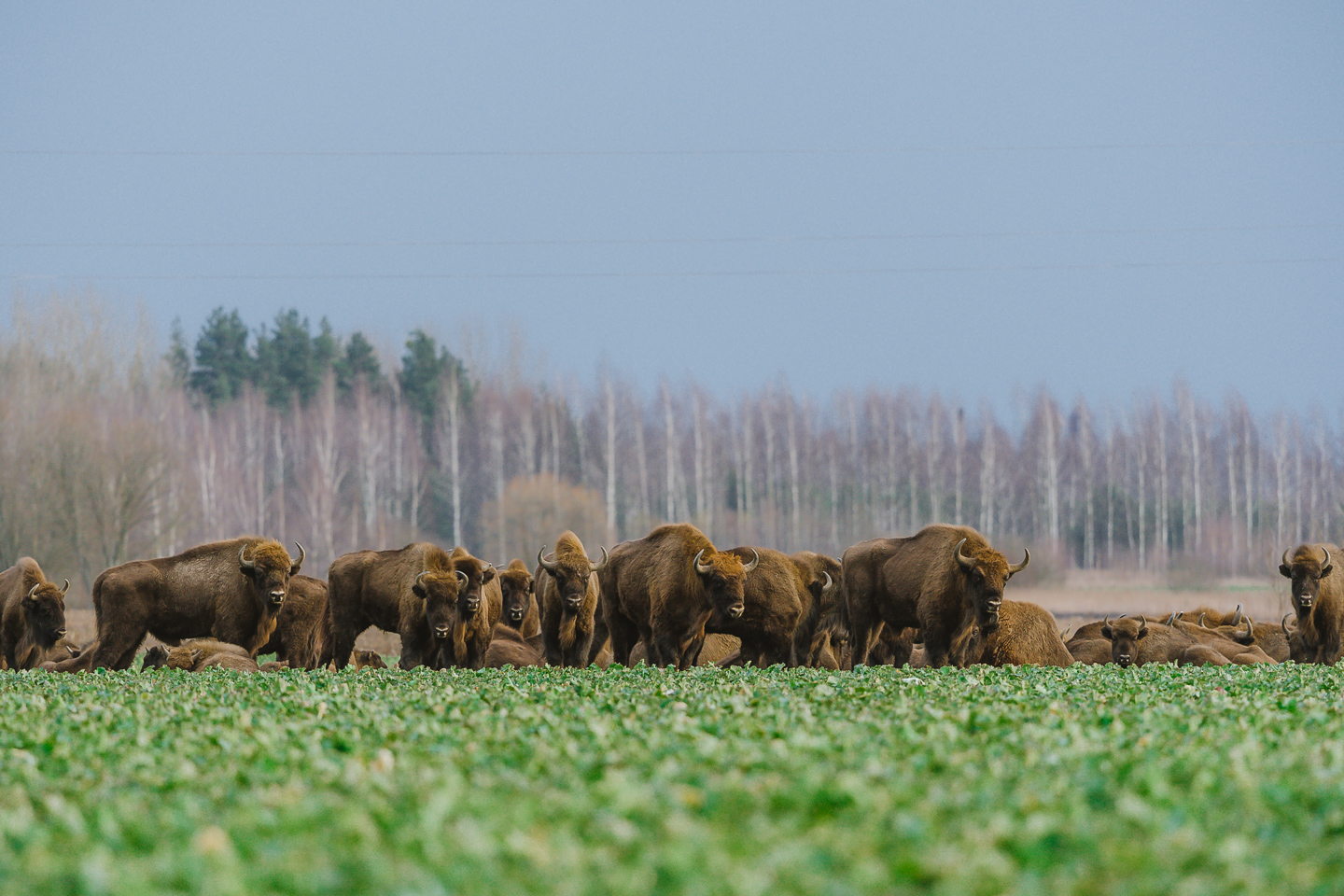
If I had to pick one place to send someone looking for bison, it would be Teremiski — a small village about 5 km from Białowieża, set in a landscape of meadows and old-growth forest. The meadows surrounding the village are among the most reliable bison-spotting locations in the entire forest, used year-round and especially in winter.
The main reason is the feeding stations. From November through March, two supplementary feeding points operate in the meadows on either side of the road as you enter the village from the Białowieża direction. Herds of 10–20 bison — sometimes more — regularly gather here. Even outside winter, the open meadows attract bison at dawn and dusk, and it’s common to encounter lone bulls or small groups grazing close to the road.
Teremiski is easily reachable by bike from Białowieża — a pleasant 20-minute ride along a quiet paved road through forest. You can also drive and park in the village. The best approach is simply to drive or cycle slowly along the road at dawn or dusk, scanning the meadows on both sides. Bear in mind that the meadows here are private land — if you wander off the road onto someone’s field, the owner may ask you to leave, so use common sense.
The Meadows Behind Białowieża Village
The meadows behind Białowieża Village are the other go-to spot, and the most convenient if you’re staying in the village. Bison come out here to forage, emerging from the forest just before sunset and returning just after sunrise.
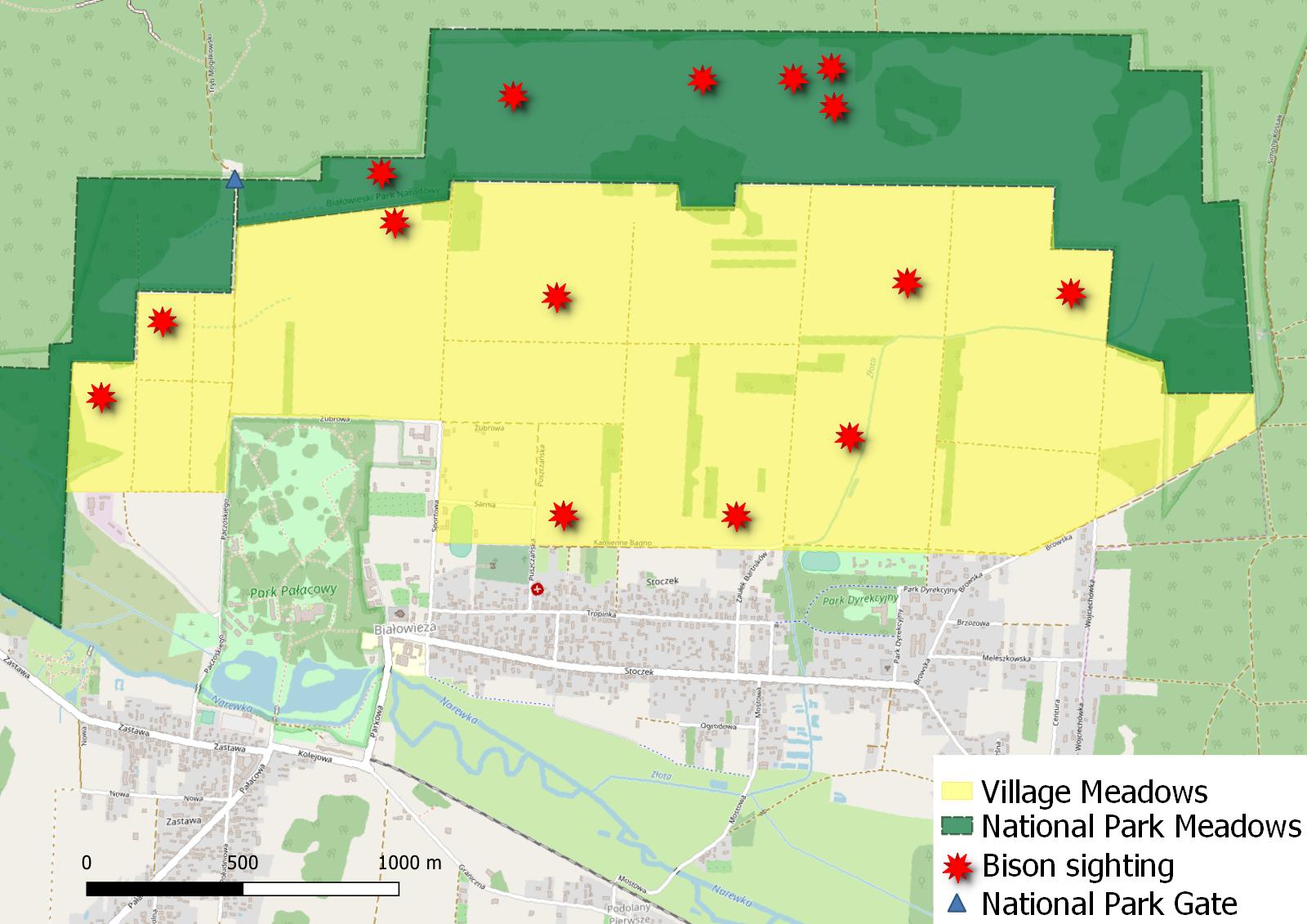
Cycle or drive to Kamienne Bagno street at sunset or sunrise. The bison sometimes graze on plots right next to the road, though they’re more often found closer to the forest edge — particularly if there is still daylight. I haven’t found any particular part of the meadows consistently better than others: I’ve encountered them to the west near the gate to the national park, and to the east behind the national park fences. Just explore the area.
Meadow bison are often more relaxed than forest individuals — somewhat accustomed to people, and usually don’t bolt at the first sight of you. Don’t pass the signs marking the border of the national park.
How to Behave When You Meet a Bison
Wild bison are generally good-natured and harmless. If you keep a comfortable distance, meadow bison will more often than not be curious rather than scared or aggressive. That said, a few precautions are worth knowing.
Watch a bison’s body language. Like many animals, their mood shows in how they hold themselves. If a bison becomes noticeably agitated — appearing restless or stomping its feet — stop approaching and back away slowly. This will almost always defuse the situation.
When uncomfortable, bison either run away or charge. Charges are rare — usually involving locals trying to move a bison off their property, not tourists. Most often, if you get too close, they simply leave. Cows with young calves are particularly sensitive and often disappear before you can get photos — but at least you’ve glimpsed Europe’s largest land mammal.
Seeing a Bison in the Forest
The forest and glades around Budy, Narewkowska Road and Narewka at dusk and dawn are your best bet for a forest encounter. Though in truth, I can count on one hand the number of times I’ve stumbled upon a bison in the forest by chance.
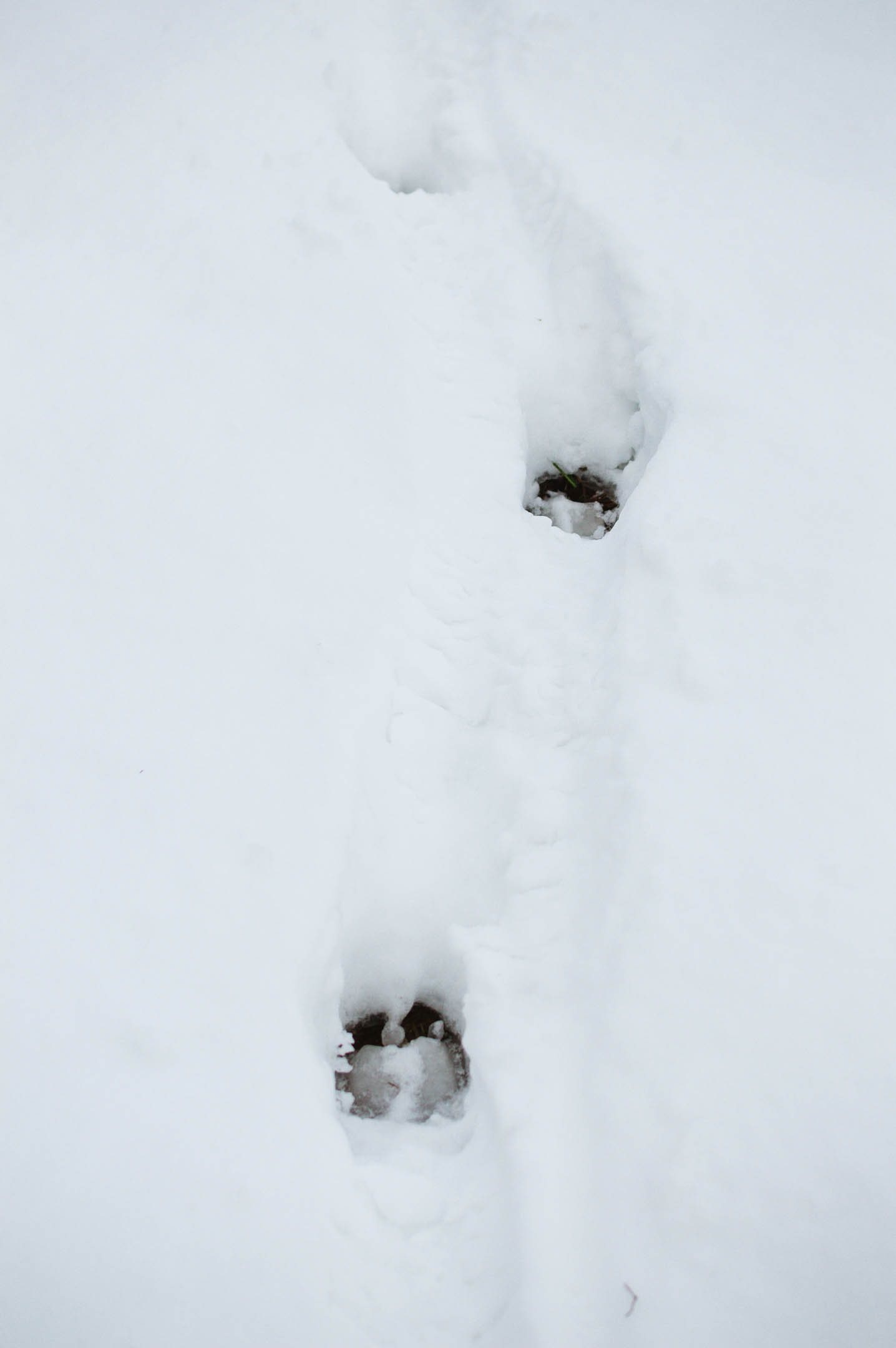
In winter it’s a different story. Fresh tracks in the snow — look for hoof prints over 10 cm across — are easy to spot and follow. Usually, if you track them for a while, you’ll find a herd resting quietly in the trees.
I don’t recommend going into the forest specifically to find any particular animal — it’s always a lottery. Go to experience the forest itself, and if you’re lucky enough to spot wildlife, that’s a great bonus.
Frequently asked questions
Where is the best place to see bison in Białowieża Forest?
Teremiski village, about 5 km from Białowieża, is the most reliable spot. Feeding stations on either side of the road attract large herds in winter, and the open meadows draw bison at dawn and dusk year-round. The meadows behind Białowieża Village are also excellent, particularly at sunrise and sunset.
What time of day is best for spotting bison?
Dawn and dusk are by far the best times. Bison emerge from the forest to forage on open meadows in the low light, and return to the forest depths during the day. Arrive at the meadows around sunrise or 30–60 minutes before sunset for the best chance.
What time of year is best for seeing bison?
Autumn and winter are the most reliable seasons. As forest food becomes scarce from October onwards, bison spend more time on open meadows and congregate around feeding stations. After fresh snowfall, you can also track them through the forest by following their hoof prints.
Were European bison extinct in the wild?
Yes. The European bison was hunted to extinction in the wild in 1927, surviving only in zoos. A careful captive breeding programme gradually rebuilt numbers, and reintroduction to Białowieża Forest began in 1952. Today the global population exceeds 7,000 animals, almost all descended from just 12 founders. Read more in the story of the European bison.
How many bison are in Białowieża Forest?
The Polish side of Białowieża Forest holds around 1,000 European bison — the largest free-roaming population in the world. Further animals live in the Belarusian section of the forest.
Are European bison dangerous?
Bison are large, powerful animals and should be treated with respect. Unprovoked attacks are rare, but bison can be dangerous if cornered or approached too closely, particularly cows with calves. Keep a minimum of 50 metres distance at all times.
Go deeper
Explore the forest with an expert
Five days tracking wolves, finding bison and walking ancient old-growth — guided by a PhD ecologist who has spent years studying Białowieża’s ecology.
View the tour →Bison are one of the highlights of Białowieża, and dawn is the best time to find them. On our 5-day old-growth seminar, an optional early morning bison walk is built into the itinerary, with a scientist on hand to explain their ecology and remarkable comeback story.
Dear Tom,
Thanks a lot for this information!
We tried 2 evenings spotting bisons, the first evening we arrived to late and it was already dark. The next day we started our evening hike 2 hours earlier and followed your instructions & map. We arrived at the meadows and just after 5 minutes waiting the first Bison decided it was time to eat! After that one the rest of the herd followed and it was magical to see them in the wild! This definitely was our highlight for our visit in Bialowiza.
Thanks again!
Likewise, this website proved to be a valuable source of data for our Bialowieza visit.
It’s quite easy to find them & get some rewarding photographs when willing to get up early. Same for other wildlife in this beautiful area.
tnx!