
Plants & Animals
The Story of the European Bison
How Europe’s largest land animal went from extinction in the wild to roaming the forest once more.
The story of the European bison is perhaps the textbook example of how humans can both decimate and restore nature.
Europe’s biggest animal once roamed vast primeval landscapes from Russia to Spain. But over the past millennium, the expanding human population drove its precipitous decline. People cut down their forests, planted crops on their meadows, and above all, hunted them to the verge of extinction.
Only by a stroke of luck were bison saved from oblivion — by Polish kings and later Russian czars, who were rather fond of their value as big game animals. Under their protection the bison held on till the early 20th century, at which point the horrors of war and empire finally wiped them out. Luckily, a few individuals survived in zoological collections. These became the saviours of the species when they were restored to the wild after WW2. Now, some 6,000 bison roam European forests once again.
What Are Bison?
There once lived seven species of bison, each adapted to different types of habitat across the globe. Only two have survived to the present day: the superficially similar European and American bison, also often called buffalo.
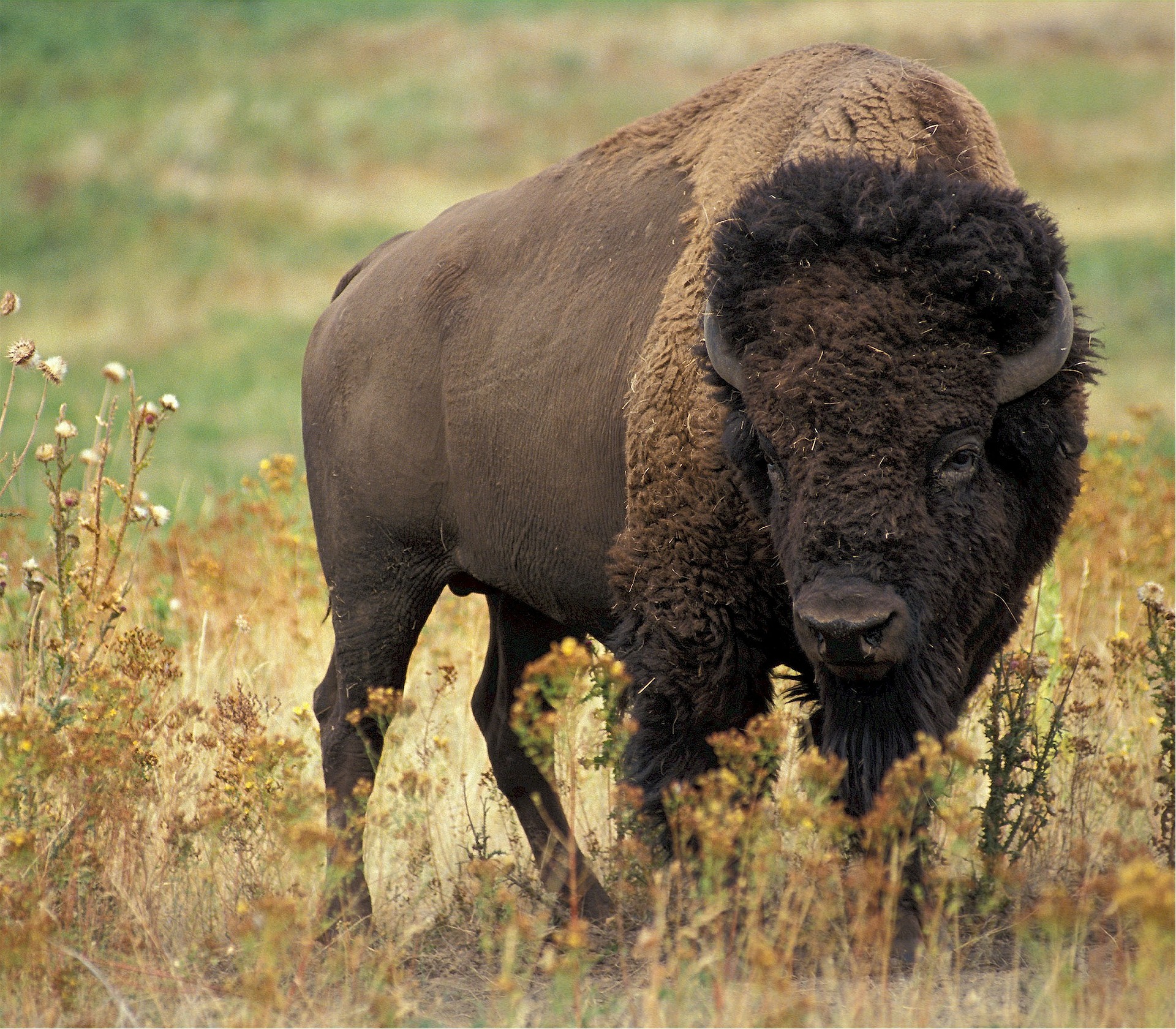
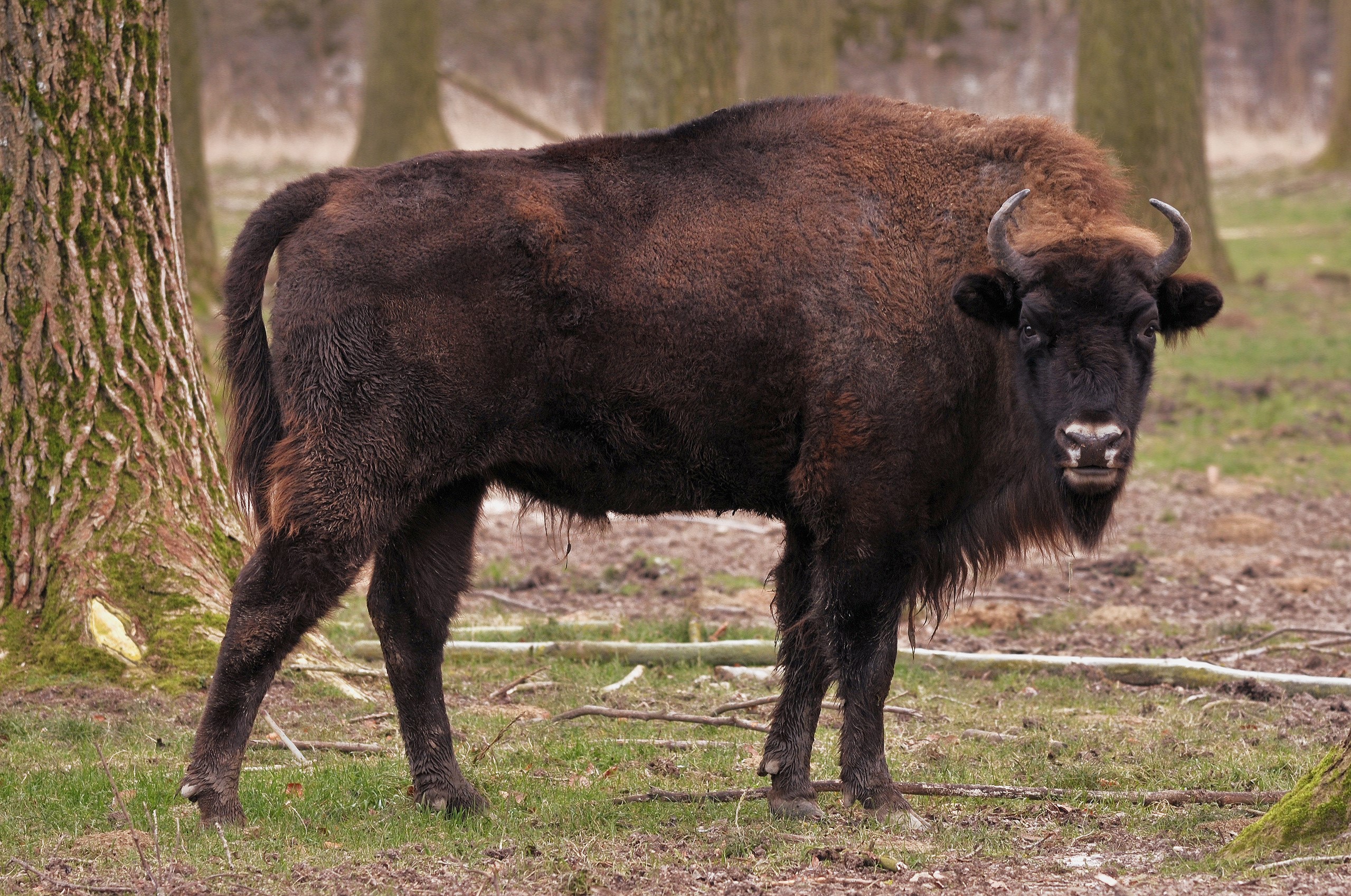
The cow-family began its evolutionary history some 5–10 million years ago. Since then, this branch of the evolutionary tree has given birth to a diverse array of bison, buffalo and cattle. Recent genetic evidence has found that their family tree is not straightforward — many distinct species have interbred with each other, often millions of years after their ancestors separated.
A groundbreaking study suggested this complex history also applies to the European bison. 120,000 years ago a male steppe bison mated with a female aurochs, the wild ancestor of modern cattle. This legendary female gave birth to what scientists have amusingly dubbed the Higgs bison, the mysterious ancestor of all modern European bison. So hardy was this lineage that it outlived both of its ancestors: the steppe bison went extinct more than 11,000 years ago and the last aurochs was shot in 1627.
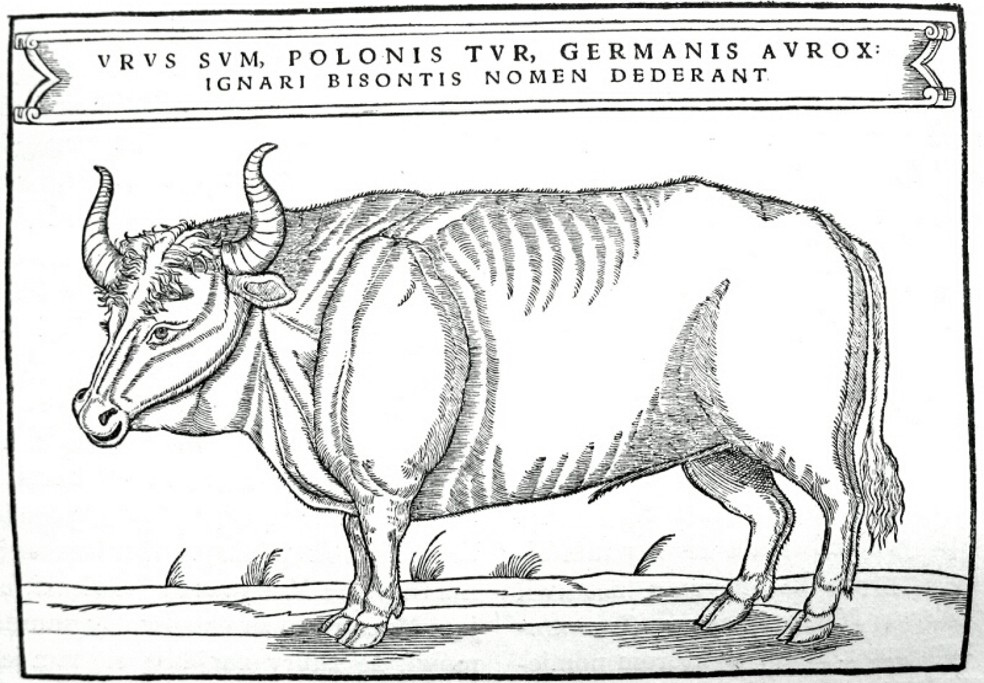
The aurochs and European bison were the largest animals of post-glacial Europe. By the middle ages both were confined to the primeval forests of eastern Europe. But the bison survived, and the aurochs did not — the last one, a female, was killed 400 years ago in Jaktorów Forest, 40 km from Warsaw. It survives to this day only in its domesticated form — the common farmyard cow.
Insights into the prehistoric lifestyles of European bison have also turned up surprises. Radioisotope analysis of fossil bones has shown bison were originally plains animals that migrated across European landscapes in search of food. This may seem counterintuitive, as modern history has known them exclusively as forest dwellers. But the bison is a refugee species, pushed out of its optimal habitats by human encroachment. Thus bison now mainly inhabit forests, a home they seem fairly well adapted to.
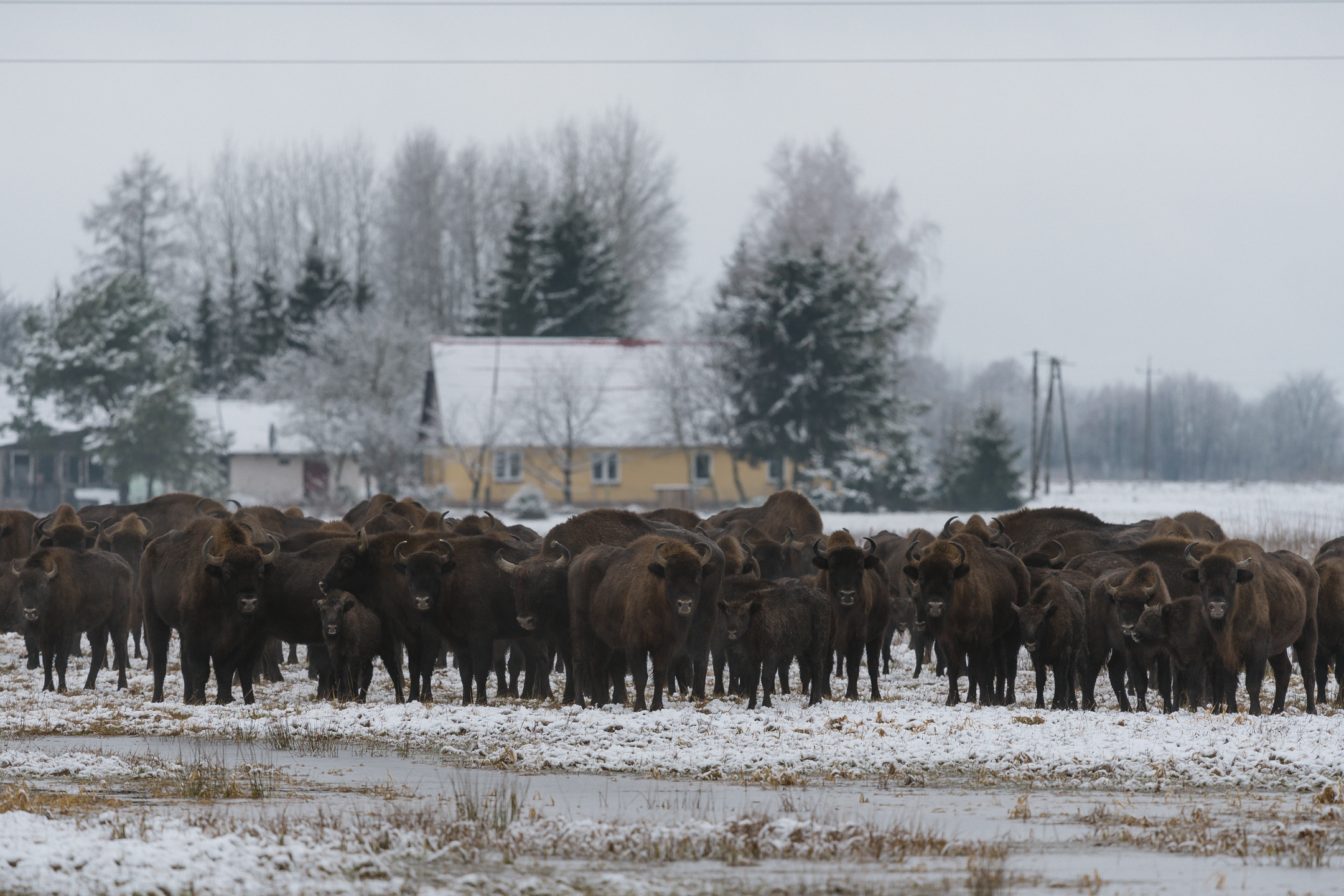
The only problem is that forests are largely devoid of food in winter. To help them out, bison have been supplementarily fed hay in winter since at least the 16th century. For the last few centuries bison have used the first heavy snows of winter as a signal to gather into herds around the hay bales left out for them, thus negating their need to migrate to greener pastures.
Fact File
| Food | Predominantly grasses, but also browse on shoots and leaves, consuming up to 32 kg per day. In winter they are supplementarily fed hay. |
| Lifespan | Up to 30 years in captivity, around 25 years in the wild. |
| Breeding | Females fertile between 4 and 20 years old. Males reach sexual maturity by age 4, but dominant males drive away bulls younger than 6 and older than 12 during the rut. |
| Social structure | Females live in mixed-sex groups averaging 12 individuals. Males are solitary or form small groups; they join mixed groups briefly during the mating season. In winter, herds of several hundred gather at feeding sites. |
| Hierarchy | Mixed groups are led by an older, experienced female who can lead for 10+ consecutive years. |
| Agility | Despite their size, they can jump over 2 m high fences and clear 3 m wide streams. |
| Size | Bulls up to 2 m tall and weighing up to a tonne. Cows somewhat smaller, up to 600 kg. |
Modern History
For 120,000 years bison roamed the European plains, surviving ice ages, giant predators and early human colonists. They inhabited the entire lowlands of Europe, except the UK, Italy and the Iberian peninsula. Modern man, however, put an end to the good times. By the 16th century the Białowieża Primeval Forest and the remote Caucasian mountains had become the bison’s final strongholds.
A unique turn of fate saved the bison of Białowieża Forest. In the late middle ages, the primeval forest and its animals became protected as the private property of the Polish-Lithuanian royalty. This protection reached its zenith in the mid-16th century, when King Sigismund II August formally passed a law giving Białowieża Forest special status and imposing the penalty of death for bison poaching.
The kings employed a small army of forest rangers (osocznicy) to enforce the ban on unsanctioned hunting and logging. At their maximum there were 300 of them, vigilantly guarding the bison and protecting the ancient forest. Despite near-constant warfare from the 16th century on, the forest with its bison survived largely intact.
Strict protection continued until Poland was colonised — ending with the third partition at the end of the 18th century. The new Russian overlords dismantled the guard system, and Russian army officers poached and logged whatever they could. Bison numbers fell to just 200 individuals.
Two czars came and went before Czar Alexander I finally took an interest. In 1803, he decreed the forest be restored to its previous special status. Over the next century bison numbers grew to around 600 at the outbreak of WW1.
The war changed everything. The German occupiers instituted the most devastating period in Białowieża Forest’s history — in two and a half years they logged 20% of the forest and killed 600 European bison for sport, meat, hides and horns. The retreating soldiers shot all but nine animals. The last wild bison in the forest was poached in 1921. The last wild bison in the world was killed by poachers in 1927 in the western Caucasus. By that year, fewer than 50 remained, all in zoos.
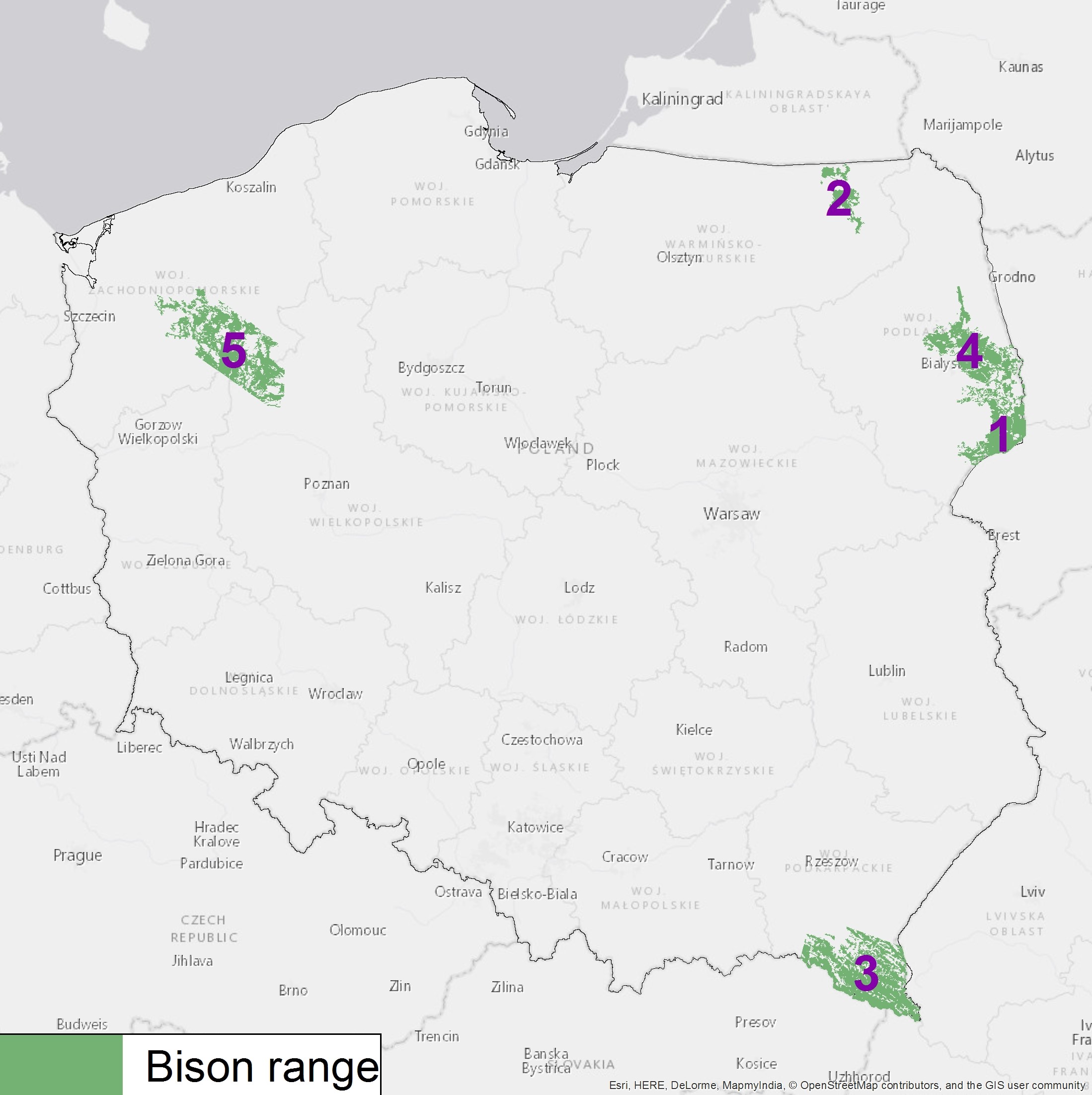
After the war a breeding programme was started in the newly independent Polish state. A few zoo individuals were transported to Białowieża Forest in 1929. Sixteen captive animals survived WW2 by some miracle. In the aftermath, Stalin demanded the forest be split between the USSR and Poland. Fortunately, the village of Białowieża and the breeding centre were awarded to Poland.
The bison were finally released back into the wild on the Polish side of the forest in 1952. Soon after, they were released on the Belarusian side too. Since then the population has gradually grown, with further populations established across Poland and neighbouring countries.
Current Status
There now live over 7,000 bison in the world, of which around 5,500 are free-ranging. About half live in Belarus and Poland, another 1,000 in Russia, and the rest in various other countries. Amazingly, they all descend from just 12 individuals. So far the species hasn’t suffered major problems associated with inbreeding.
A Model Reintroduction
The resounding success of the European bison’s reintroduction is a model case study. The first and foremost reason for its success is undoubtedly the bison’s centuries-old public affection: it was and remains a national icon. The importance of this democratic mandate for reintroductions cannot be understated.
Factors that have supported the bison’s harmonious coexistence with humans include: a breeding centre almost a century old, governmental compensation schemes for farmers, dedicated rangers who track and return wandering bison, disease monitoring programmes, genetic health monitoring to prevent inbreeding, winter supplementary feeding, and wildlife tourism that brings essential income to local communities.
Many of these costly measures were put in place during Poland’s poorest post-war period — evidence that for something the public hold dear, money is no object. If modern society is to have a future, we will have to restore Europe’s vital ecological processes. The European bison has proven such feats can be done. Let us use this remarkable story to inspire us to reverse some of the ecological damage of the industrial age.
Were European bison extinct in the wild?
Yes. The European bison was hunted to extinction in the wild in 1927. The species survived only in zoos. A careful captive breeding programme gradually rebuilt numbers, and reintroduction to Białowieża Forest began in 1952. Today the global population exceeds 7,000 animals, almost all descended from just 12 founders.
How many bison are in Białowieża Forest?
The Polish side of Białowieża Forest now holds around 1,000 European bison — the largest free-roaming population in the world. Further animals live in the Belarusian section of the forest. The global population exceeds 7,000 animals, almost all descended from just 12 captive founders.
Are European bison dangerous?
Bison are large, powerful animals and should be treated with respect. Unprovoked attacks are rare, but bison can be dangerous if cornered or approached too closely, particularly cows with calves. Keep at least 50 metres away.
Go deeper
Explore the forest with an expert
Five days tracking wolves, finding bison and walking ancient old-growth — guided by a PhD ecologist who has spent years studying Białowieża’s ecology.
View the tour →The bison's return to Białowieża is one of Europe's great rewilding stories, and it's still unfolding. Join our 5-day old-growth seminar to walk Europe's last lowland primeval forest and understand how large animals shape ecosystems from the ground up.
Thank you for a thorough scientific and historical perspective. Looking forward to visiting the forest and using my South African game-spotting skills to see one of these bison.