
General Information
Ten Reasons to Visit Białowieża Forest
A primeval landscape and biodiversity hotspot — here’s why you should choose it for your next adventure.
1. It’s the last forest of its kind
A vast jungle once covered Europe from the Atlantic Ocean to Russia. But over time, it was cleared to make way for towns, agriculture and plantation forests. Against all odds, a small fragment survived: Białowieża Forest.
Replete with meandering rivers, extensive wetlands and animals extinct elsewhere, a walk through the woodland is like stepping back in time, allowing you to see how Europe looked before man came along.
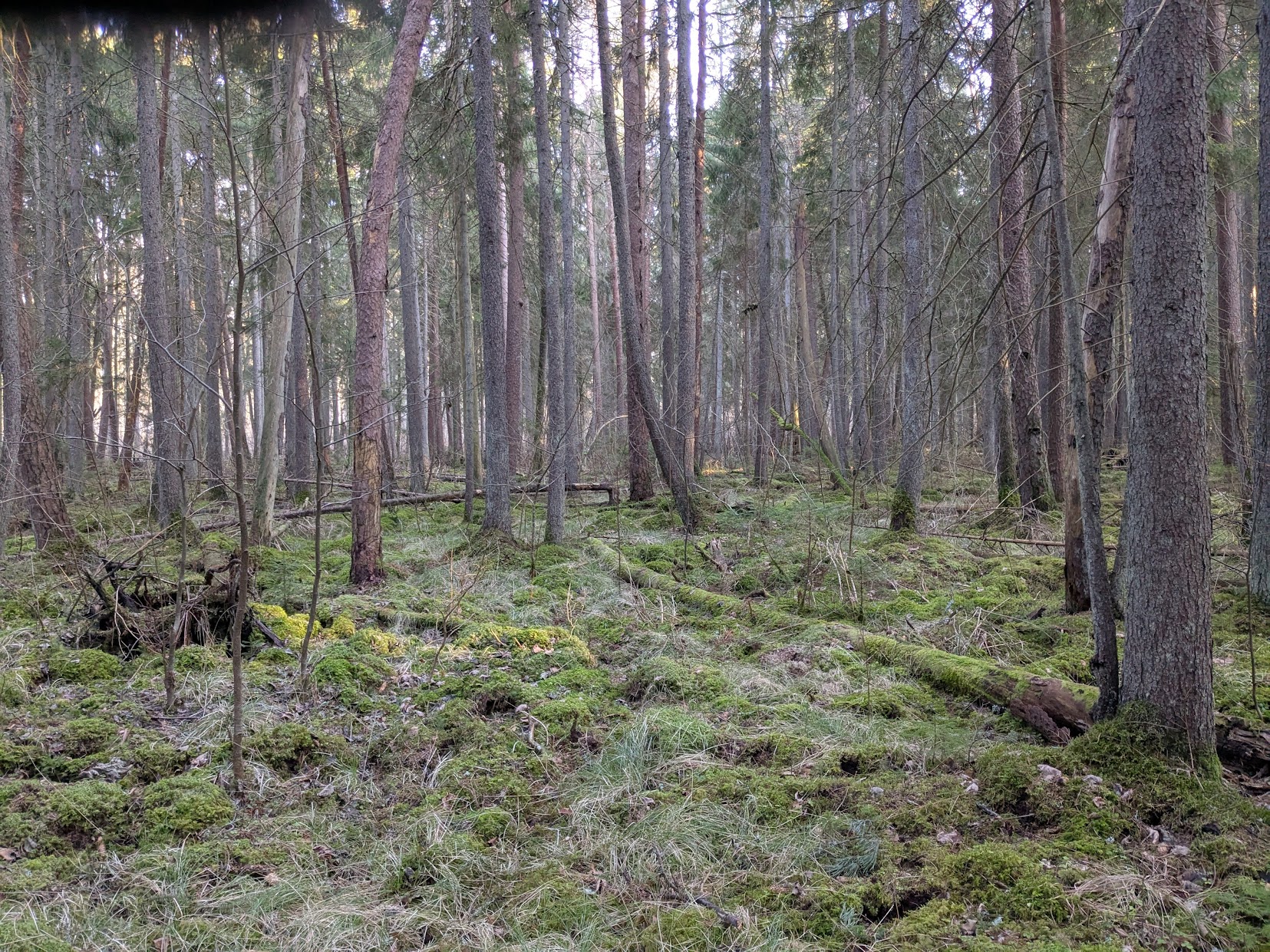
2. Ancient trees of natural origin
Trees here reach grand, old ages. What’s more, most trees in Białowieża Forest were not planted — they germinated naturally. Natural processes have gifted the forest trees of a variety of ages and species: gnarly trees often centuries old form the canopy, while underneath grow their descendants.
This is in stark contrast to the even-aged monocultures of managed forests, where trees are planted by man and logged long before they reach maturity.
3. The European bison
After the last ice age (11,000 years ago), humans advanced across the continent, decimating populations of all larger species. Mammoths, woolly rhinos and aurochs were hunted to extinction, till only the bison remained of the megafauna. It was saved from oblivion in Białowieża Forest, due to centuries of protection by Lithuanian, Polish and Russian kings.
See the chapter on bison history to read about its survival, extinction, and remarkable reintroduction.
4. Astonishing biodiversity
The forest’s variety of habitat types hosts a myriad of species, many endangered. A short walk can take you from a purely coniferous woodland, through a deciduous leafy forest, before finishing up in a swampy jungle.
This mosaic was the natural order of things, till humans came along and simplified the continent’s landscape by tearing down trees, draining swamps and straightening rivers.
5. A stronghold of relict species
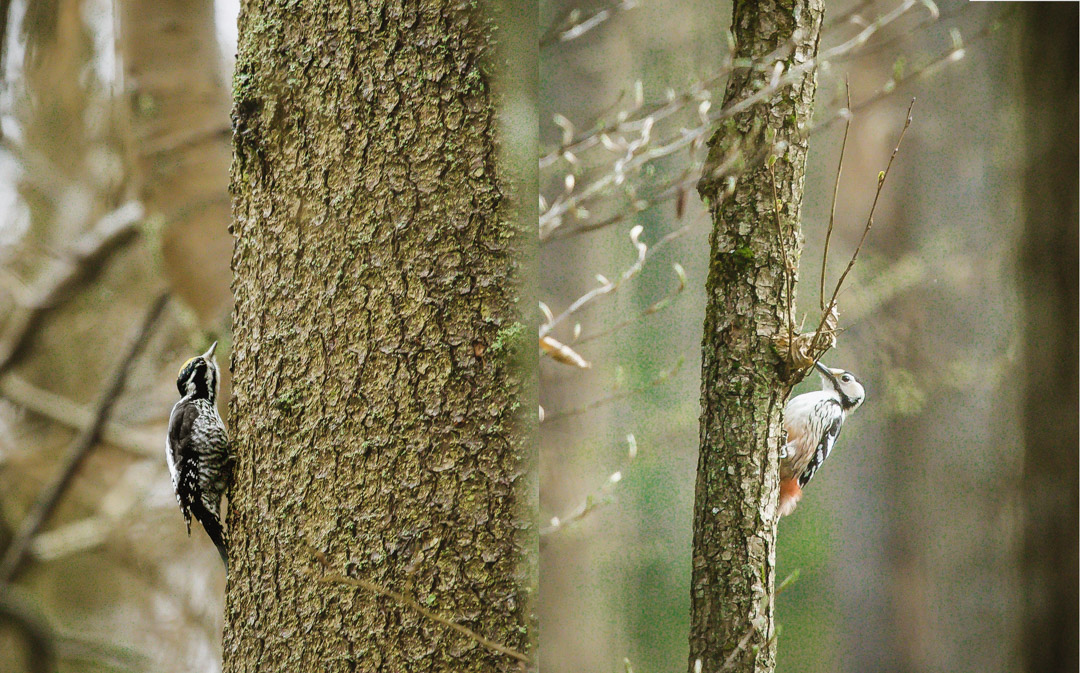
The many rare types of habitat in Białowieża host many ‘relict’ species. Take the three-toed woodpecker for example. This picky bird nests almost exclusively in dead or dying spruce trees over a hundred years old — trees that are rare across most of Europe.
6. Proof that biodiversity and mankind can coexist
Białowieża is often described as primeval, but it is by no means ‘untouched’. Humans have played a large role in shaping the forest’s structure — through hunting herbivores, grazing farm animals inside the forest, and logging.
But despite this pressure, the forest has retained its natural character. Aside from a few mostly wartime years, the forest’s resources have been sustainably exploited. It proves that if we make space for nature, it can survive and even thrive amid modern civilisation.
7. Abundant natural processes
In managed forests, the life and death of trees is heavily controlled. Trees are planted, cut down, and replanted; any disturbances like tree diseases are quickly exterminated. This leaves little room for natural processes like decomposition and natural selection.
By contrast, in the more natural parts of Białowieża Forest, nature is left to its own devices. Trees live and die of their own accord. An oak can live for 500 years, before falling over, whereupon it begins its second life — decomposing for decades, forming habitat for a myriad of dead-wood-loving species.
8. The history
Białowieża Forest survived only because it was adored and protected by royalty. It was a tribal wilderness till as late as the 12th century. Around this time, Polish and Lithuanian kings took a liking to it and made it their private, protected hunting ground.
Over the centuries, epic hunts were organised, palaces were built, and armies passed through. But it was only after Europe fell into total war in the early 20th century that the system of protection collapsed. The area offers story aplenty for history buffs.
9. Visit Belarus
The enigmatic last dictatorship of Europe is just next door. Historically the entirety of Białowieża Forest lay within one country, but in the aftermath of WW2, Stalin split it in half with the Polish-Belarusian border. Later, in the 1970s, the Soviets built a border fence, isolating the eastern portion of the forest.
But signs of change are now emerging. The Belarusian authorities have introduced a three-day pass for tourists. Adventurous souls can now cross into the Belarusian side without going through the arduous process of getting a visa.
10. Seasonal variety
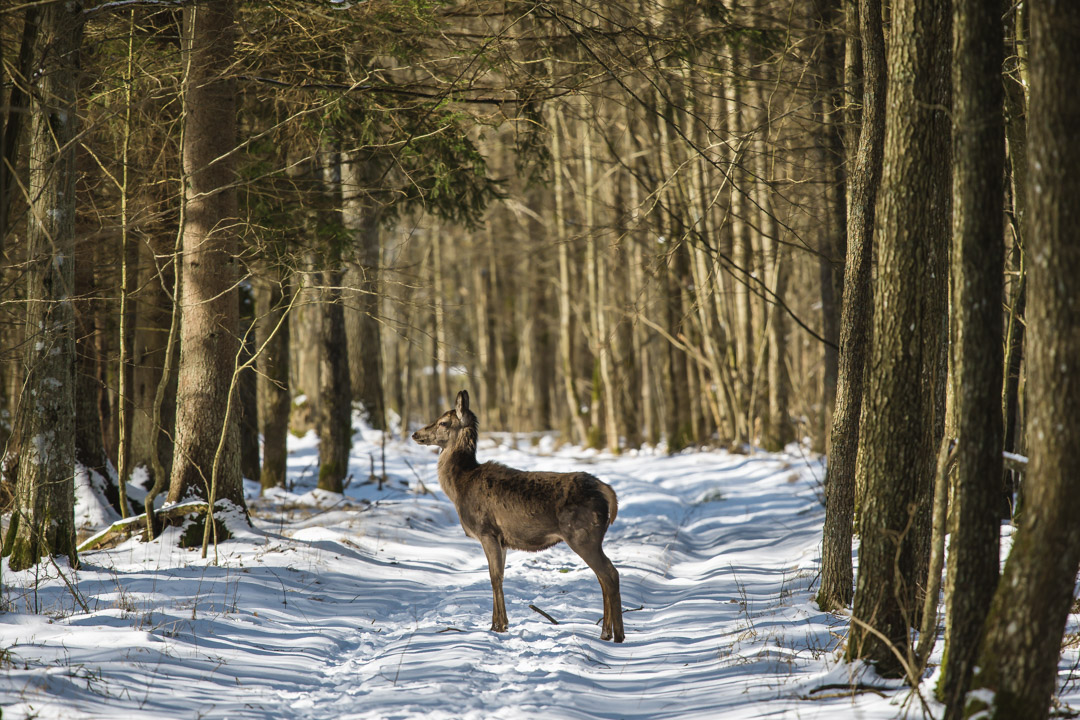
The forest undergoes remarkable seasonal changes, and each time of year has its air of magic. From the fairy-tale snow blanket in winter, to the flower carpet of spring, to the lush greenery of summer, and the astonishing colours of autumn. All seasons distinct and worth seeing.
Go deeper
Explore the forest with an expert
Five days tracking wolves, finding bison and walking ancient old-growth — guided by a PhD ecologist who has spent years studying Białowieża’s ecology.
View the tour →Ready to experience all ten reasons firsthand? Our 5-day old-growth seminar takes you deep into Europe's last primeval forest, learning how old-growth works, how rewilding is already transforming the landscape, and why this place matters for the future of European nature.
One Response